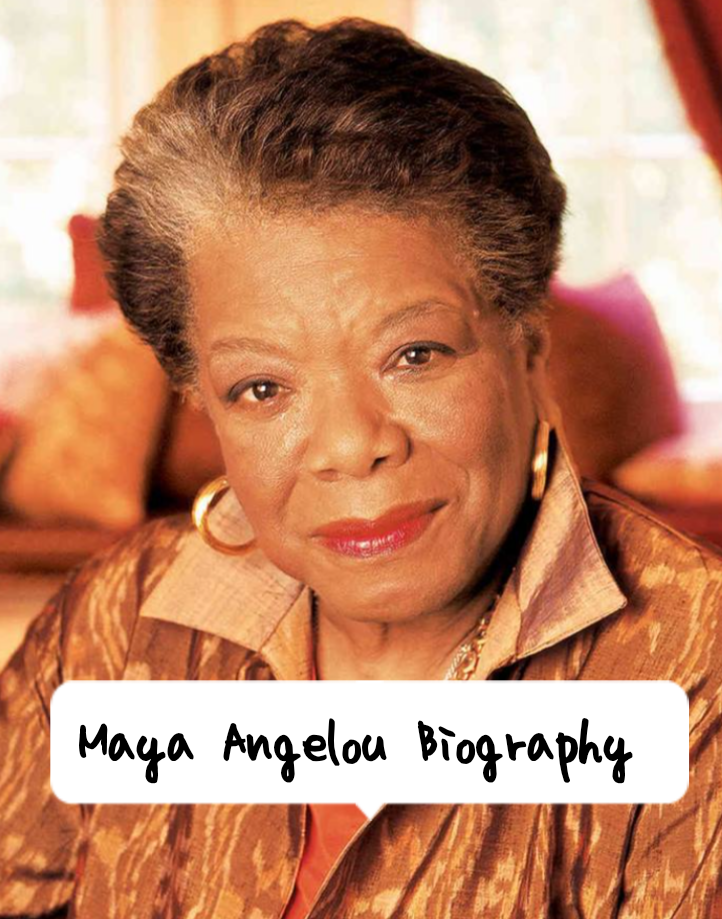
Maya Angelou Biography: Early Life, Career, Personal Life & Age
Maya Angelou was a remarkable woman who touched many lives through her words and actions. Born on April 4, 1928, in St. Louis, Missouri, she grew up to become a famous poet, writer, and fighter for civil rights. Her real name at birth was Marguerite Annie Johnson, but the world knows her as Maya Angelou. She wrote books that shared her own life stories, poems that inspired people, and she spoke out for equality and justice. Many people ask, “Who is Maya Angelou?” She was someone who faced hard times but rose above them to help others. Her work covers topics like growing up Black in America, facing unfair treatment because of race, and finding strength inside yourself. Angelou’s books, such as her first one called “I Know Why the Caged Bird Sings,” published in 1969, show how she turned pain into powerful stories. This book talks about her childhood and the challenges she met. She also wrote poems like “Still I Rise” and “Phenomenal Woman,” which celebrate being strong and proud. As a civil rights activist, she worked with leaders like Martin Luther King Jr. and Malcolm X. She lived a long life until May 28, 2014, when she passed away at the age of 86 in Winston-Salem, North Carolina. Today, her words still teach us about kindness, bravery, and standing up for what is right. In this article, we will look at her early years, family, jobs, awards, passing, and more. We aim to make it easy to read so everyone can learn from her story. Her legacy lives on in schools, books, and hearts around the world. She showed that no matter where you start, you can make a big difference. Think about her quote: “I’ve learned that people will forget what you said, people will forget what you did, but people will never forget how you made them feel.” This sums up her impact. She made people feel seen and strong.
Angelou’s story is not just about one person. It reflects bigger issues in American history, like the fight against racism and for women’s rights. She used her voice to highlight these problems in a way that was honest and moving. Readers often find her work helpful for understanding their own lives. For example, her autobiographies explore themes of identity, resilience, and hope. These books are part of African American literature and inspire many in women’s empowerment movements. Entities like the Southern Christian Leadership Conference and Wake Forest University played roles in her life. Her influence reaches into education, where her works are taught to show the power of personal narratives. By reading about her, we gain insights into how one person’s experiences can change society. This introduction sets the stage for diving deeper into her journey, starting with her beginnings.
Maya Angelou Early Life
Maya Angelou’s early years were full of ups and downs that shaped who she became. She entered the world on April 4, 1928, in St. Louis, Missouri, as Marguerite Annie Johnson. Her parents, Bailey Johnson and Vivian Baxter, split up when she was just three years old. After that, she and her brother Bailey moved to live with their grandmother, Annie Henderson, in a small town called Stamps, Arkansas. Life in Stamps was tough because of segregation, which meant Black people and white people had separate schools, stores, and even water fountains. Angelou saw racism every day, like when white people treated her grandmother poorly. Despite this, her grandmother taught her to be proud and work hard. Annie ran a store that helped the Black community during hard times like the Great Depression.
At age seven, a sad event changed her life. While visiting her mother in St. Louis, she was hurt badly by her mother’s boyfriend. This trauma made her stop talking for almost five years. She felt guilty because the man was killed after she told what happened. During this quiet time, she read a lot of books by authors like Charles Dickens and William Shakespeare. Reading helped her heal and love words. Her teacher, Bertha Flowers, encouraged her to speak again by sharing poems and stories. This experience showed Angelou the power of literature to mend hearts.
When she was about 13, she moved back to her mother in San Francisco, California. There, she went to George Washington High School and studied dance and drama on a scholarship at the California Labor School. At 16, she became the first Black woman to work as a streetcar conductor in San Francisco, breaking barriers in 1943. This job showed her determination. But soon after, at 17, she gave birth to her son, Guy Johnson. Being a young mom added more challenges, but she kept pushing forward. Her early life taught her about resilience, the unfairness of racism, and the importance of family support. These lessons appear in her writings, like in “I Know Why the Caged Bird Sings,” where she describes feeling trapped but longing to be free. Topics like childhood trauma and racial discrimination are key in her stories. Her time in Arkansas and California built her character, preparing her for a life of creativity and activism. Understanding her early years helps us see why she became a voice for those who felt silenced.
In Stamps, religion played a big role. She attended church and learned Bible stories, which influenced her poetic style later. The community there was close-knit, offering some safety from outside hate. Yet, events like seeing a Black man chased by a white mob scared her. Moving to California opened new doors, with more diversity and chances to learn arts. She danced and acted, finding joy in performance. This period also introduced her to different cultures, broadening her view. By sharing these stories, Angelou educated others on the effects of segregation. Her early struggles with identity as a tall, awkward girl added to her themes of self-acceptance. Overall, her childhood was a mix of pain and growth, setting the foundation for her remarkable path.
Maya Angelou Personal Life and Family
Maya Angelou’s personal life was rich with relationships that influenced her deeply. She married twice, first to Tosh Angelos in 1951. He was a Greek electrician and aspiring musician. From this marriage, she took the name “Maya Angelou,” combining her childhood nickname “Maya” from her brother and a version of his last name. They divorced in 1954. Her second marriage was to Paul du Feu in 1974, but it ended in 1981. Angelou chose not to marry again, focusing on her work and independence. She believed in love but also in being true to herself.
Family was central to her. Her son, Guy Johnson, born on May 4, 1945, when she was 17, became a big part of her life. Guy grew up to be a writer and poet, following in her footsteps. He faced his own challenges, including a serious car accident in 1973 that left him with injuries, but he recovered and supported his mother’s career. Angelou wrote about their bond in her last book, “Mom & Me & Mom,” published in 2013. It shows the ups and downs of being a single mother and rebuilding ties with her own mom, Vivian Baxter. Vivian was a strong woman who worked as a nurse and merchant seaman, teaching Angelou about toughness.
Her brother Bailey Johnson Jr. was her close companion in childhood. He protected her and gave her the nickname “Maya.” They shared the moves between family members. Later, Bailey struggled with addiction but remained important to her. Angelou also had friendships that felt like family, such as with Oprah Winfrey, who called her a mentor. These connections highlight themes of women’s empowerment and support networks in her life.
Angelou lived in various places, including Egypt and Ghana from 1961 to 1966, where she worked as an editor. These experiences abroad enriched her views on global issues. Back in the US, she settled in Winston-Salem, North Carolina, teaching at Wake Forest University from 1982 until her death. Her home was a gathering place for friends and family. She enjoyed cooking and wrote cookbooks like “Hallelujah! The Welcome Table” in 2004, sharing family recipes.
In her personal life, Angelou dealt with health issues later, but she stayed active. Her story teaches about forgiveness, as she mended relationships with her parents. Entities like Guy Johnson and Vivian Baxter are key in understanding her. LSI terms like Maya Angelou family show how her loved ones inspired her writings on motherhood and bonds. Her life shows that family, biological or chosen, provides strength. By sharing honestly, she helped readers reflect on their own families.
Angelou’s approach to life was positive, even after hardships. She advised living with grace and humor. Her personal tales in books offer lessons on healing from past hurts. For instance, reconciling with her mother showed growth. Guy’s success as an author and educator continues her legacy. Overall, her personal life was about love, learning, and lifting others.
Maya Angelou Career
Maya Angelou had many jobs that showed her talents and drive. She started as a performer in the 1950s. After high school, she danced and sang in nightclubs under the name Maya Angelou. She joined a tour of the opera “Porgy and Bess” from 1954 to 1955, performing in Europe and Africa. This experience opened her eyes to the world. Back in the US, she recorded her first album, “Miss Calypso,” in 1957, mixing calypso music with her voice.
In the late 1950s, she moved to New York and joined the Harlem Writers Guild. There, she met writers like James Baldwin, who encouraged her to write. This led to her acting in plays, like “The Blacks” in 1961. She also directed and wrote for theater. Her activism grew. In 1960, she became the northern coordinator for the Southern Christian Leadership Conference, working with Martin Luther King Jr. She organized events and raised funds for civil rights. She met Malcolm X and planned to work with him, but his death in 1965 changed that.
From 1961 to 1966, she lived in Egypt and Ghana, editing newspapers like The Arab Observer and The Ghanaian Times. This time connected her to African independence movements. Back in America, she wrote her first autobiography, “I Know Why the Caged Bird Sings,” in 1969. It became a bestseller and started her series of seven autobiographies. Books like “Gather Together in My Name” (1974) and “The Heart of a Woman” (1981) shared more of her life.
She wrote poetry too. Collections like “Just Give Me a Cool Drink of Water ‘fore I Diiie” (1971) earned a Pulitzer Prize nomination. Her poems often talk about rising above hardship. In 1972, she wrote the screenplay for “Georgia, Georgia,” becoming the first Black woman to have a screenplay produced. She directed films like “Down in the Delta” in 1998.
In education, she taught at Wake Forest University as Reynolds Professor of American Studies from 1982. She lectured worldwide, sharing wisdom. Her career mixed art, activism, and teaching. Themes like African American literature and civil rights run through her work. Entities like the Harlem Writers Guild and SCLC were crucial. Her jobs show versatility, from dancer to director. She added value by breaking barriers, like being a Hollywood director.
Angelou’s writing style was unique, blending storytelling with poetry. Her books educate on history through personal eyes. For example, her time in Africa linked American civil rights to global freedom fights. She also wrote essays and children’s books, expanding her reach. Her career inspires those in creative fields to try many things. By the end, she had over 30 honorary degrees and influenced pop culture.
Maya Angelou Achievements and Honors
Maya Angelou earned many awards for her work in writing, activism, and more. In 1970, “I Know Why the Caged Bird Sings” was nominated for the National Book Award. Her poetry book “Just Give Me a Cool Drink of Water ‘fore I Diiie” got a Pulitzer Prize nomination in 1972. She received a Tony Award nomination for her role in the play “Look Away” in 1973.
In 1993, she recited her poem “On the Pulse of Morning” at President Bill Clinton’s inauguration, the first poet to do so since 1961. This brought her wide fame. She won three Grammy Awards for spoken-word albums, like “On the Pulse of Morning” in 1994.
The US government honored her with the National Medal of Arts in 2000 from President Bill Clinton. In 2010, President Barack Obama gave her the Presidential Medal of Freedom, the highest civilian award. She got the Spingarn Medal from the NAACP in 1994 for her civil rights work.
Academically, she held the lifetime Reynolds Professorship at Wake Forest University. Over 50 colleges gave her honorary degrees. In 2013, she received the Literarian Award from the National Book Foundation for her contributions to literature.
Posthumously, in 2022, she appeared on a US quarter as part of the American Women Quarters series. Her achievements highlight her impact on poetry, memoirs, and social justice. Three key facts: She overcame silence to speak at a presidential event, wrote seven life stories, and broke color barriers in jobs.
Her honors reflect her role in feminism and Black history. She inspired leaders like Oprah Winfrey. These awards add value by showing her lasting influence.
Maya Angelou Death
Maya Angelou passed away on May 28, 2014, at her home in Winston-Salem, North Carolina. She was 86 years old. In her later years, she faced health problems, including heart issues, but she kept teaching and writing. Her last book, “Mom & Me & Mom,” came out in 2013. At the time of her death, she was working on another autobiography about her friendships with world leaders.
Her passing brought tributes from around the world. President Barack Obama called her a “brilliant writer, a fierce friend, and a truly phenomenal woman.” A memorial service at Wake Forest University celebrated her life with songs and poems. Her son Guy spoke about her love for people.
Her legacy continues through her books, which are read in schools, and foundations like the Maya Angelou Center for Health Equity. In 2021, a school in Washington, DC, was named after her. Her death marked the end of an era, but her words live on, teaching about hope and equality.
Conclusion
Maya Angelou’s life teaches us about overcoming obstacles with grace and courage. From her tough childhood to her global impact, she showed the power of words and action. Her stories help us understand racism, strength, and humanity. Today, in 2026, her work remains relevant in fights for justice. Read her books to find inspiration. Remember her quote: “Try to be a rainbow in someone’s cloud.” She was that rainbow for many.
FAQs
What is Maya Angelou most famous for?
Maya Angelou is most famous for her autobiography “I Know Why the Caged Bird Sings,” published in 1969, and her poems like “Still I Rise.” These works share her life and inspire resilience.
Why did Maya Angelou stop speaking?
At age seven, after a traumatic assault, she stopped speaking for nearly five years, feeling her words caused harm.
What are 3 important facts about Maya Angelou?
- She was the first Black female streetcar conductor in San Francisco in 1943.
- She recited a poem at President Bill Clinton’s inauguration in 1993.
- She received the Presidential Medal of Freedom in 2010.
What is Maya Angelou’s most famous poem?
Her most famous poem is “Still I Rise,” from 1978, which celebrates overcoming oppression.
How old was Maya Angelou when she died?
She was 86 years old when she died on May 28, 2014.
What happened to Maya Angelou’s son?
Her son Guy Johnson became a writer and survived a serious accident in 1973. He continues her legacy.
Why is Maya Angelou important?
She is important for her contributions to literature, civil rights, and empowering marginalized voices.
Why did Maya Angelou change her name?
She changed it in 1951, combining her brother’s nickname “Maya” with her first husband’s last name “Angelos.”