Brigadier Matjeng Biography: Early Life, Education, Personal Life, Career
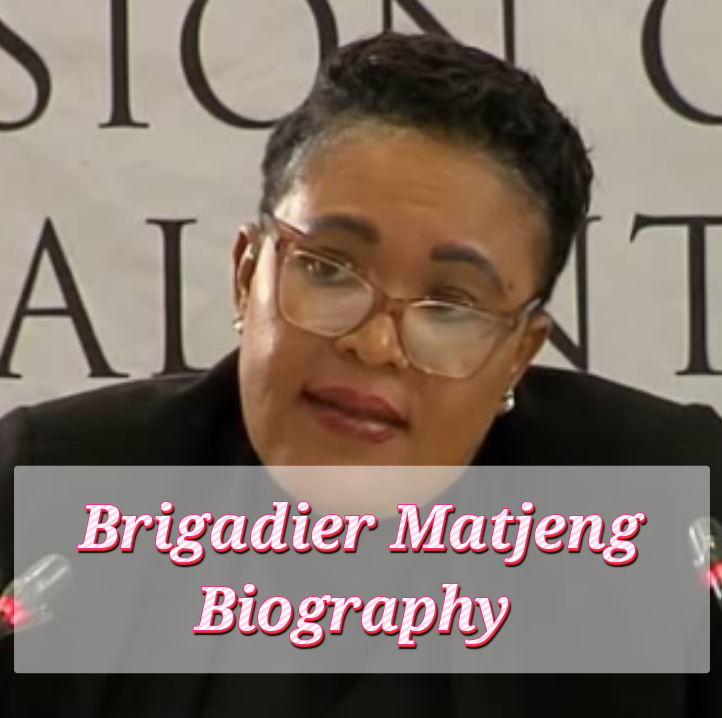
Brigadier Rachel Matjeng serves as a senior officer in the South African Police Service, known as SAPS. She holds a key position in the Forensic Services Division, focusing on quality management. Her name has come into the spotlight due to her testimony at the Madlanga Commission of Inquiry into Criminality, Political Interference, and Corruption in the Criminal Justice System on February 5, 2026. This commission looks into issues like corruption within the police and justice system. Matjeng’s involvement stems from her professional duties and a personal connection that raised questions about conflicts of interest.
In her role, she oversees important aspects of forensic work, which helps solve crimes by analyzing evidence. Forensic services in SAPS include managing criminal records and crime scenes. This work is vital for ensuring justice in South Africa, a country facing high crime rates. Matjeng’s career shows dedication to public service, but recent events have led to discussions about ethics in policing.
This article explores her life and work to help readers understand who she is. We cover her background, education, career path, current duties, a noted relationship, personal details, and more. By reading this, you will gain insights into how police leaders operate and the challenges they face. South Africa’s police force, SAPS, employs over 180,000 people and handles everything from daily patrols to complex investigations. Understanding figures like Matjeng helps us appreciate the human side of law enforcement.
Her story also highlights the importance of transparency in government contracts, called tenders. These are agreements where companies provide services to the state. When personal ties mix with official work, it can lead to concerns about fairness. The Madlanga Commission, started to root out corruption, has brought such issues to light. Matjeng’s testimony provides a window into these matters, showing how personal choices can intersect with professional responsibilities.
As we go through each part, keep in mind that facts come from public records and official statements. This ensures accuracy and avoids guesswork. Now, let’s start with her early years.
brigadier matjeng Early Life and Background
Details about Brigadier Rachel Matjeng’s early life are not widely available in public sources. She was born and grew up in South Africa during a period of major shifts. The country transitioned from apartheid, a system of racial separation that ended in 1994, to a democratic society. This change opened doors for many people, including women and those from diverse communities, to pursue careers in public service.
Growing up in postapartheid South Africa likely influenced her views on justice and equality. During this time, the nation focused on building a fair society after years of division. Education and job opportunities expanded, allowing more individuals to enter fields like policing. Matjeng’s family background remains private, but it probably played a role in fostering her interest in law and order. Many officers in SAPS come from modest beginnings, where values like discipline and community service are emphasized.
Her upbringing occurred in an era when South Africa was rebuilding its institutions. The police force, once associated with oppression under apartheid, transformed into a serviceoriented body. Young people like Matjeng saw policing as a way to contribute to national healing and safety. While specific childhood stories are not shared publicly, her path suggests a strong sense of duty from a young age.
This background is common among many South African public servants. It reflects the country’s journey toward inclusivity. For readers, understanding this context helps explain why someone might choose a career in law enforcement. It also shows how personal roots can shape professional choices. In South Africa, where crime affects daily life, officers like Matjeng represent hope for better security.
Estimates place her age in the mid40s to mid50s, based on her career timeline. This puts her birth around the 1970s or 1980s, a time when the struggle against apartheid was intense. Growing up then would have exposed her to ideas of resilience and change. Her story encourages young people, especially women, to pursue roles in public safety.
brigadier matjeng Education
Public information on Brigadier Rachel Matjeng’s formal education is limited, but her position in SAPS points to solid training in relevant fields. She likely completed high school in South Africa, followed by specialized studies or certifications needed for police work.
In SAPS, officers often attend the police academy for basic training. This includes courses on law, ethics, and practical skills like handling evidence. Matjeng may have pursued further education in areas like criminology, which studies crime and its causes, or forensic science, which involves scientific methods to investigate crimes. These fields are crucial for her role in forensics.
Advanced training in management would also be part of her background, as leaders in SAPS need skills to oversee teams and processes. Programs at institutions like the University of South Africa or police colleges offer such qualifications. Her education equipped her with knowledge to handle complex tasks, such as ensuring quality in forensic reports.
Education in policing emphasizes both theory and practice. For example, trainees learn about human rights, a key focus postapartheid. This helps officers respect citizens while enforcing laws. Matjeng’s learning path shows the value of continuous development in a career like hers.
For aspiring officers, this section highlights that education is a stepping stone. In South Africa, free basic education and scholarships make it possible for many to advance. Matjeng’s story illustrates how learning leads to leadership roles, inspiring readers to value schooling.
brigadier matjeng Career
Brigadier Rachel Matjeng began her career in the South African Police Service many years ago. She started in entrylevel positions, gaining experience in various areas of policing. Over time, she advanced through the ranks, showing skill and commitment.
By 2012, she had reached the rank of brigadier, a senior level in SAPS. This promotion reflects her contributions to the force. Her work has focused on forensic services, where she helps manage systems that support investigations.
Throughout her career, Matjeng has dealt with criminal record management and crime scene processes. These are essential for building strong cases in court. Her rise demonstrates the opportunities for growth in SAPS, especially for women in a field once dominated by men.
Challenges in her career include navigating a system with high demands and public scrutiny. SAPS officers often work long hours in tough conditions. Matjeng’s persistence highlights the rewards of dedication, such as making a difference in community safety.
This career path educates readers on how police ranks work. Starting as a constable, one can climb to captain, colonel, and beyond with performance and training. Matjeng’s journey encourages those interested in law enforcement to aim high.
brigadier matjeng Current Role
Today, Brigadier Rachel Matjeng heads the Quality Management section in the Criminal Record and Crime Scene Management unit of SAPS Forensic Services in Pretoria. This role involves overseeing standards to ensure accurate and reliable forensic work.
Her duties include monitoring contracts, like those for health services in forensics, and ensuring compliance with rules. Quality management means checking processes to avoid errors, which is critical for justice. For instance, proper handling of evidence can lead to correct convictions.
In this position, she reports to higher officers and collaborates with teams. The Forensic Services Division plays a big part in solving crimes, using science like DNA analysis. Matjeng’s work supports this by maintaining high standards.
Understanding her role helps readers see the behindthescenes effort in policing. It’s not just about arrests; it’s about building solid evidence. This contributes to reducing crime in South Africa, where forensics help in cases from theft to serious offenses.
brigadier matjeng The Relationship with Vusimuzi “Cat” Matlala
Brigadier Rachel Matjeng has acknowledged an onandoff romantic relationship with businessman Vusimuzi “Cat” Matlala, starting in 2017. She described him as humble, respectful, and romantic during her testimony on February 5, 2026.
Matlala’s company, Medicare24, received a contract worth about R360 million for health risk management services in June 2024. This contract fell under Matjeng’s oversight. It was later canceled due to concerns.
She stated that she informed her superior about the relationship and denied any favors. Payments from Matlala, ranging from R113,000 to R300,000, were presented as personal gifts, not linked to work.
This situation raises questions about ethics in public service. Rules require declaring conflicts to maintain trust. The Madlanga Commission examined this to ensure fairness in tenders.
For education, this shows why separation of personal and professional life matters in government roles. It prevents bias and upholds integrity.
Personal Life
Brigadier Rachel Matjeng keeps much of her personal life private. She is a mother, balancing family with her demanding career. This reflects the challenges many working parents face, especially in highstress jobs like policing.
Her relationship with Matlala, as mentioned, was known to close friends. She has not shared details about marriage or other family members publicly. This privacy is common among public figures to protect loved ones.
In her testimony, she emphasized that personal matters did not affect her work. This highlights the human aspect of officers, who have lives outside duty.
Readers can learn that police officers are people too, with families and relationships. Supporting their wellbeing helps them serve better.
Conclusion
Brigadier Rachel Matjeng’s story combines dedication to policing with recent public attention. From her roots in a changing South Africa to her leadership in forensics, she represents commitment to justice. The events at the Madlanga Commission remind us of the need for transparency.
Her career inspires, showing paths in public service. As South Africa works on stronger institutions, figures like her play key roles. Stay informed on such matters to support fair systems.
FAQs
Who is Brigadier Rachel Matjeng?
Brigadier Rachel Matjeng is a senior officer in SAPS, heading quality management in forensic services. She has a long career in policing and recently testified at the Madlanga Commission.
What is Brigadier Rachel Matjeng’s age?
Her exact age is not public, but estimates suggest she is in her mid40s to mid50s, based on her professional timeline.
Where is Brigadier Matjeng from?
She was born and raised in South Africa, growing up during the postapartheid era.
What is Brigadier Rachel Matjeng’s education?
Details are limited, but she likely has training from the SAPS academy and possibly studies in criminology or forensics.
What is her role in SAPS?
She leads the Quality Management section in the Forensic Services Division, overseeing standards and contracts.
What is the SAPS tender scandal involving Brigadier Matjeng?
It involves a R360 million contract awarded to a company linked to her personal relationship, later canceled.
Who is Vusimuzi Cat Matlala?
He is a businessman accused of criminal activities, who had a romantic relationship with Matjeng.
What did Brigadier Matjeng say at the Madlanga Commission?
She admitted the relationship, denied favors, and called payments gifts.
Was Brigadier Matjeng involved in bribery?
She refutes claims, stating money received was personal, not bribes.
What is the net worth of Brigadier Rachel Matjeng?
Estimates based on SAPS salaries place it around R1.2 million annually, but exact net worth is not public.