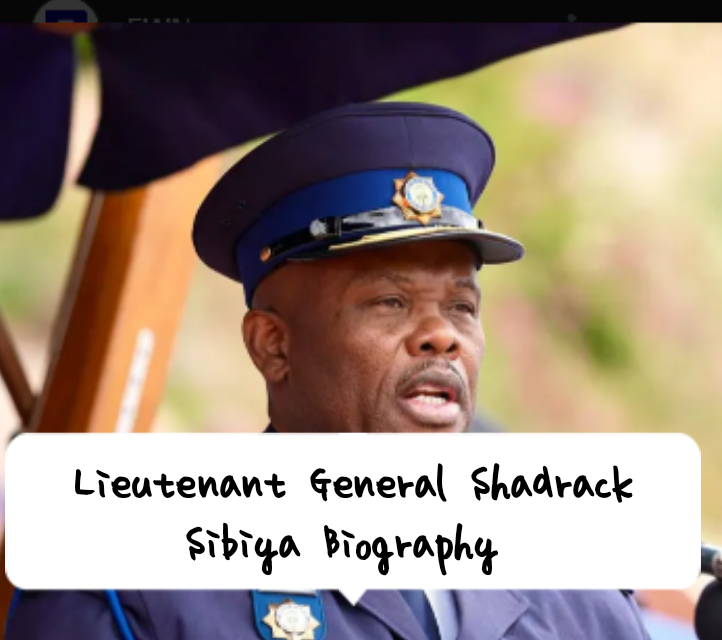
Lieutenant General Shadrack Sibiya Biography: Life, Age, Career, Personal Life & Education
Lieutenant General Shadrack Sibiya Biography
Lieutenant General Shadrack Sibiya is an important name in South African policing. On February 18, 2026, he appeared before the Madlanga Commission in Pretoria to answer questions about serious claims against him. His path started as a young officer and led him to a senior position in the South African Police Service, or SAPS. This article explains his background, learning, work experience, family life, and main points to help people understand the situation clearly.
Sibiya often appears in news about police matters in South Africa. He has led efforts against major crimes, including groups involved in illegal activities and wrongdoing. With his current suspension, people seek clear facts beyond the stories. Here, we look at his early years, studies, job history, private life, and a summary. We also answer frequent questions to make everything straightforward.
The SAPS holds a key role in public safety across the country. Senior officers like Sibiya guide how crimes are handled and solved. His experiences point to both strong points and difficulties in this area. Readers can see how one officer’s story connects to larger topics in law enforcement.
Lieutenant General Shadrack Sibiya Early Life and Education
Shadrack Sibiya was born on July 15, 1967, in Johannesburg, South Africa. He spent his early years in Gauteng province, an active region full of opportunities and demands. While much about his childhood remains out of the public eye, records note roots in Lefaragatlhe, near Phokeng in Rustenburg. This setting probably influenced his interest in serving the community.
In his youth, Sibiya put effort into schooling. He attended Kgatsheng Middle School and completed his secondary education at Rauwane Sepeng in 1988. He built solid foundations in subjects such as English and mathematics, which proved useful later. At 20 years old, in 1989, he began training as a student constable at the Hammanskraal Police Academy. This step marked his entry into official police duties.
While serving, Sibiya continued his studies. He obtained a diploma in criminal justice through the University of South Africa, commonly called UNISA. He also earned qualifications in criminology and forensic science. These subjects covered evidence collection and investigation methods. In time, he achieved a B-Tech in Policing along with a National Diploma in Police Administration.
Before fully committing to SAPS, he worked as an investigator for Telkom and pursued studies toward becoming an advocate. His learning combined theory from classes with practical abilities. For instance, forensic training aided in handling crime scenes, while administration courses prepared him for managing groups. This approach helped him advance in his field.
Many officers in South Africa begin early and develop expertise gradually. Sibiya followed this route, turning basic education into specialized knowledge for higher responsibilities. This background sets the stage for his professional growth.
Lieutenant General Shadrack Sibiya Career
Sibiya has spent more than 37 years in law enforcement. His start came in 1989 as a student constable at Hammanskraal Academy. Soon after, he shifted to detective duties in Knysna, gaining hands-on experience with everyday crimes and case preparation.
He later joined the Scorpions unit, focused on serious offenses, and moved to the Hawks after the Scorpions disbanded. As a brigadier, he headed the Hawks in Gauteng and managed the Commercial Crimes section. These positions involved dealing with fraud, corruption, and organized networks, including matters like human trafficking and counterfeit products.
Following his time with the Hawks, Sibiya took charge of forensic services for the City of Johannesburg, targeting local corruption issues. In 2023, he returned to SAPS in the role of Deputy National Commissioner for Crime Detection, reaching the rank of Lieutenant General. In this post, he directed detectives countrywide, overseeing teams for unresolved cases, homicides, and other major inquiries.
He contributed to prominent investigations, such as the Senzo Meyiwa matter. He introduced measures to gather related files in one place for faster progress. His work aimed to improve how crimes get resolved in SAPS. At his level, deputy commissioners lead large groups and develop strategies.
Over time, difficulties emerged. Around 2015, he encountered accusations linked to earlier cases, including one involving Richard Mdluli. He described these as efforts to harm his standing. By 2025, additional concerns surfaced, resulting in his suspension. As of February 18, 2026, he addressed the Madlanga Commission regarding claims of connections to individuals like Vusimuzi ‘Cat’ Matlala and Imran Bate.
Testimony included suggestions of accepting payments, slowing arrests, and acquiring surveillance items. Sibiya rejected these points, describing them as a planned effort to undermine him. He referred to more than 20 previous cases filed against him. He also mentioned disagreements with KwaZulu-Natal Commissioner Nhlanhla Mkhwanazi concerning file management.
Sibiya suggested that groups such as the MK Party played a part in targeting him. He upheld his professional conduct throughout. His record includes recognition for tackling crime alongside recent scrutiny.
In SAPS, such senior roles cover critical areas like crime resolution and intelligence. Sibiya’s journey from entry-level to leadership offers inspiration, while inquiries raise questions about accountability.
Opinions in the public vary. Some view him as an effective officer, while others raise concerns based on reported links. The commission works to clarify issues of interference and misconduct. Results may influence future practices in SAPS.
This career path illustrates commitment in policing. It also demonstrates how accusations can affect reputations. It provides lessons on dedication and the need for transparency in public roles.
Lieutenant General Shadrack Sibiya Personal Life
Sibiya maintains privacy regarding his family matters. He is married to Helen Sibiya and they have children together. The family resides in areas like Centurion within Gauteng province. His demanding position often requires travel and extended hours away from home.
In discussions, he has noted that his responsibilities limit family time, a situation common among high-ranking officers. Earlier mentions of other relationships exist in some reports, but current information centers on his present marriage.
From statements around 2025, Sibiya indicated plans to retire in a few years. This suggests he anticipates more family involvement in the future. His private side reflects the effort to maintain balance amid a challenging profession.
Conclusion
Shadrack Sibiya’s story traces a dedicated rise within South African policing. Born in Johannesburg in 1967, he advanced through consistent education and service. Studies at UNISA, early roles at Telkom, and positions in the Scorpions and Hawks prepared him for national leadership in crime detection.
However, on February 18, 2026, he responded to serious allegations during his appearance at the Madlanga Commission. He has denied any wrongdoing, viewing the claims as repeated attempts to discredit him. His experiences highlight both achievements and obstacles in law enforcement.
This account offers lessons on perseverance and skill-building in police service. It also underscores challenges leaders face in maintaining trust. For readers, it supplies context on SAPS operations and ongoing inquiries. Stay informed through reliable updates on the commission proceedings.
FAQs
Who is General Sibiya?
Lieutenant General Shadrack Sibiya serves as a senior officer in the South African Police Service, previously holding the position of Deputy National Commissioner for Crime Detection. Born in 1967, he has dedicated over 37 years to policing.
What is General Sibiya’s background?
He was born in Johannesburg, completed studies at UNISA, worked initially at Telkom, entered SAPS in 1989, and progressed to lead the Hawks in Gauteng.
What are the allegations against General Sibiya?
Accusations involve corruption, extortion, associations with figures such as Vusimuzi ‘Cat’ Matlala, and obtaining surveillance equipment, presented during his testimony at the Madlanga Commission on February 18, 2026.
Why was General Sibiya suspended?
His suspension followed implications raised at the Madlanga Commission, including claims of interference and connections to criminal elements, prompting his appearance and testimony on February 18, 2026.
What is the relationship between General Sibiya and Nhlanhla Mkhwanazi?
The two have reported tensions related to operational matters, such as centralizing case files, with Sibiya suggesting Mkhwanazi supports efforts to discredit him.
Is General Sibiya credible?
He rejects all accusations and receives backing from certain individuals, including Robert McBride in past contexts, though others question aspects based on evidence presented at the commission.