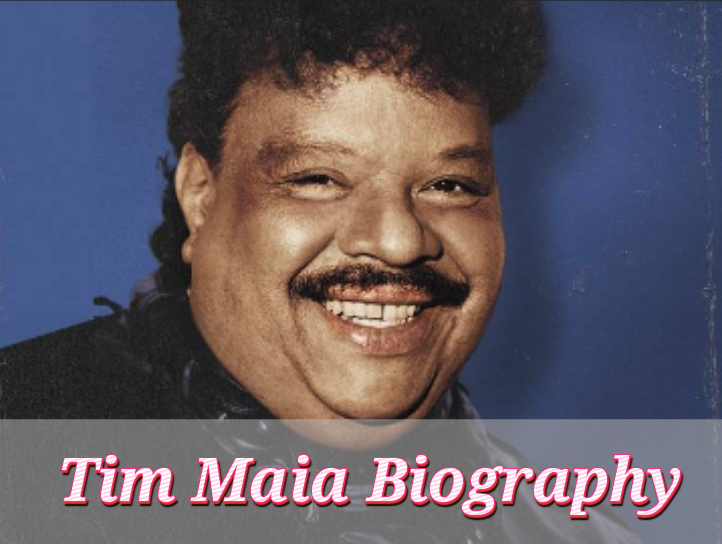
Tim Maia Biography: personal Life, Education, Net Worth, Career, Age, Awards
Tim Maia Biography
Tim Maia was a famous Brazilian musician who changed the way people listened to music in Brazil. His real name was Sebastião Rodrigues Maia. He was born on September 28, 1942, in Rio de Janeiro, Brazil. Tim mixed American soul music with Brazilian styles like samba and bossa nova. This made him known as the father of Brazilian soul. He had a big voice and a fun personality. People loved his songs because they were full of energy and emotion. Tim’s music helped start a movement called Black Rio, which celebrated Afro Brazilian culture. He lived a wild life with ups and downs, but his songs still play today. This article looks at his life from start to end. It covers his early years, learning, family, money, work, problems, what he left behind, and some common questions. Tim died on March 15, 1998, at age 55, but his music lives on. He made over 30 albums and influenced many artists. His story shows how one person can mix cultures and make something new. Readers will learn about a man who loved music more than anything.
Tim started young and faced many challenges. He went to the United States as a teen and learned about soul music there. When he came back, he brought those sounds to Brazil. His first big hit came in 1970 with his album called Tim Maia. It stayed on the charts for 24 weeks. Songs like Azul da Cor do Mar became classics. Tim was not just a singer. He was also a songwriter and businessman. He started his own record label called Seroma in 1974. This was one of the first independent labels in Brazil. He wanted more control over his money and music. Over his career, he won 13 Brazilian Music Awards. His style was ironic and humorous. He sang about love, parties, and life. Even though he had health issues later, his early work set a high mark. This introduction sets the stage for understanding Tim’s full story. He was a pioneer who blended worlds.
Tim Maia Early Life
Tim Maia came from a big family in Rio de Janeiro. He was born Sebastião Rodrigues Maia on September 28, 1942, in the Tijuca neighborhood. Tijuca was a working class area in the north zone of the city. His family had 19 children, but only 12 lived past birth. Tim was the 18th child and the second youngest. His parents worked hard to feed everyone. His mother, Maria Imaculada Maia, cooked homemade food. His father ran a small business delivering boxed lunches to people. From age six, Tim helped the family by delivering these lunches. People called him Tião Marmiteiro because of this job. Marmiteiro means lunch box carrier. Tim did not like the job much. He often stopped to play with friends, which made deliveries late. This showed his free spirit even as a kid.
The family faced hard times with so many kids. Money was tight, but music was always around. Tim heard American rock and roll on the radio. He loved singers like Elvis Presley. By age eight, he started singing and writing simple songs. His voice was strong even then. At 12, he joined a music academy to learn more. This was his first real step into music. He learned to play guitar and drums. In 1956, at age 14, he formed his first band called Os Tijucanos do Ritmo. The band played rock and roll. They lasted only one year, but it gave Tim experience. He got the nickname Babulina from a song called Bop A Lena by Ronnie Self. Another boy in the area, Jorge Ben, had the same nickname. Tim also met Roberto Carlos, who later became a big star. They played together in a group called The Sputniks in 1957.
Tim’s father died in 1959. This was a big change for the family. Tim was 17 and felt ready to leave home. He wanted to see the world and make music. His father did not like America, but Tim dreamed of going there. He saved money from odd jobs. A local priest helped him pay for the trip. Tim lied to officials and said he was a student going to study. He left Brazil with just 12 dollars in his pocket. He spoke no English. This bold move started a new chapter. In the United States, he lived in Tarrytown, New York, with distant cousins. He worked small jobs and learned about soul music. Artists like Sam Cooke and Otis Redding inspired him. He formed a band called The Ideals and wrote songs. But in 1963, he got arrested for marijuana and a stolen car. He spent time in jail and got deported back to Brazil in 1964.
Back home, Tim struggled at first. His friends had moved on. Roberto Carlos and Jorge Ben were getting famous. Tim felt out of place. But his time in America shaped his sound. He brought soul to Brazilian music. His early life taught him to be tough and follow his dreams. Poverty made him hungry for success. Family duties showed him hard work. Music was his escape and passion. These years built the man who would change Brazilian soul.
Tim Maia Education
Tim Maia’s education was not formal for long. He went to school in Tijuca as a child. But music was his real teacher. At age 12, he enrolled in a music academy in Rio de Janeiro. There, he learned basic skills like singing and playing instruments. He picked up guitar quickly. Tim taught himself a lot by listening to records. He copied Elvis Presley and Little Richard. In 1957, he joined The Sputniks band. This was like hands on learning. He played drums and sang. The group broke up soon, but Tim kept practicing.
In 1959, Tim went to the United States. He said he was a student to get in. But he did not go to school there. Instead, he learned from life. He lived in New York and heard soul music everywhere. He joined The Ideals, a vocal group. They recorded a song he wrote called New Love. This was his music education. He learned English by talking to people. Tim watched American bands and copied their style. He stayed four years until deportation in 1963.
Back in Brazil, Tim did not go back to school. He focused on music. He took guitar lessons and taught others. He showed Erasmo Carlos how to play basic chords. Tim’s education came from streets, radios, and stages. It was not books, but beats and notes. This made his music real and raw.
Tim Maia Personal Life
Tim Maia’s personal life was full of love, family, and struggles. He married five times and had at least six children. His relationships were often stormy. He lived big, with lots of parties and excesses. Tim had a girlfriend named Geisa Gomes da Silva. They lived together but broke up. When they got back, she was pregnant with a boy. The real father did not claim him. Tim adopted the child, named Marcio Leonardo Maia, born in 1974. They called him Leo. Then, Tim and Geisa had a son together, Carmelo Maia, born in 1975. They called him Telmo. Tim and Geisa married, but divorced when Leo was 12.
Tim had other kids too. One was Jose Carlos da Silva Nogueira, born in 1966 and died in 2002. Tim was uncle to Ed Motta, a singer. Family was important, but Tim’s habits hurt it. He loved whiskey, cocaine, and marijuana. He called it his triathlon. This led to health problems like obesity and diabetes. Tim joined a cult called Rational Culture in 1974. He quit drugs for a while and made albums about it. But he left in 1976 and went back to old ways.
Tim lived in excess. He spent money on cars and instruments. He had prison time for drugs. His weight went up, and he ignored doctors. In his last years, he was obese and sick. On March 8, 1998, he collapsed on stage in Niteroi. He went to hospital and died on March 15, 1998, from pulmonary edema and infection. He was 55. His personal life showed a man who loved deeply but fought demons. Family remembers him as funny and kind. His kids carry his name in music.
Tim Maia Net Worth
Tim Maia’s net worth was not high when he died. He made good money from music, but spent it fast. In the 1970s, his albums sold well. His first album in 1970 topped charts for 24 weeks. He earned from tours and hits. But Tim lived like a rock star. He bought cars, instruments, and drugs. He had five marriages, which cost money. In 1977, he was broke and needed his album to sell. He started his own label, Seroma, to keep more profits. This helped, but habits drained cash.
At death in 1998, his net worth was low. Sources say he had financial troubles often. No exact number exists, but estimates put it under 1 million dollars. His legacy is in music, not money. Today, his songs earn royalties for family. Compilations like Nobody Can Live Forever from 2012 bring income. A 2014 movie about him added value. Tim’s worth was his talent, not bank account.
Tim Maia Career
Tim Maia’s career lasted almost 30 years. He started young and became a star. In 1956, at 14, he formed Os Tijucanos do Ritmo. They played rock. In 1957, he joined The Sputniks with Roberto Carlos. The band broke up, but Tim kept going. In 1959, he moved to the US. There, he joined The Ideals and wrote New Love. He learned soul from Sam Cooke and James Brown. Deported in 1963, he returned to Brazil.
Back home, Tim struggled. In 1968, he released his first single. It did not sell much. But in 1970, Elis Regina sang his song These Are the Songs with him. This got him noticed. Philips signed him. His first album, Tim Maia, came out in 1970. It had hits like Azul da Cor do Mar and Primavera. It stayed on charts 24 weeks. This started his fame. In 1971, he released Tim Maia Volume 2 with Que Beleza. In 1972, Volume 3 had more success. In 1973, Volume 4 included Reu Confesso and Gostava Tanto de Voce.
In 1974, Tim joined Rational Culture cult. He made Tim Maia Racional Volume 1 and 2 in 1975. These were experimental. He left the cult in 1976 and destroyed unsold copies. Back to normal, he released Tim Maia in 1976. In 1978, Tim Maia Disco Club had Sossego. The 1980s brought more hits. In 1983, O Descobridor dos Sete Mares album had the title track and Me De Motivo. In 1986, Tim Maia had Do Leme ao Pontal.
In the 1990s, Tim kept recording. In 1990, he did bossa nova covers. He toured a lot. He won 13 Brazilian Music Awards. He mixed soul, funk, samba, rock, disco, jazz, and more. He pioneered samba rock and samba funk with Jorge Ben. His label Seroma was first independent in Brazil. He released over 30 albums. Hits include:
Nao Quero Dinheiro (So Quero Amar) from 1971
Que Beleza from 1972
Reu Confesso from 1973
Sossego from 1978
O Descobridor dos Sete Mares from 1983
Me De Motivo from 1983
Do Leme ao Pontal from 1986
Tim’s career had highs like chart tops and lows like missed shows. But he influenced Black Rio movement. He brought Black pride to music. His voice was powerful. He sang in English and Portuguese. In 1998, he collapsed on stage. His last show was March 8, 1998. He died soon after. But his music ended.
Tim worked with artists like Elis Regina and Os Mutantes. He opened doors for soul in Brazil. His 1970s albums are classics. He remade hits later. His career shows talent and determination.
Tim Maia Controversies
Tim Maia had many controversies. His life was wild. He used drugs a lot. He liked whiskey, cocaine, and marijuana. He called it triathlon before shows. This caused missed concerts. Newspapers wrote about it. In the US, he got arrested in 1963 for marijuana and stolen car. Deported, he served time. In Brazil, he had more prison for drugs.
Tim joined Rational Culture cult in 1974. It believed in UFOs and energy. He quit drugs short time and made albums. But he left in 1976, angry. He destroyed records. This shocked fans. Tim fought with labels over money. In 1973, he started Seroma because of royalties. He was outspoken. He criticized people. His weight and health were issues. He ignored doctors. This led to early death. Tim had fights with girlfriends. His excesses made headlines. But fans loved his humor. Controversies made him famous too.
Tim Maia Legacy
Tim Maia’s legacy is big in Brazil. He is called father of Brazilian soul. He mixed soul with samba and funk. This influenced artists like Ed Motta and Seu Jorge. Black Rio movement started because of him. It celebrated Afro Brazilian pride. In 2011, a book Vale Tudo came out. In 2014, a movie Tim Maia told his story. Compilations like Nobody Can Live Forever in 2012 spread his music worldwide. His songs play at parties. A statue in Tijuca honors him. Tim showed Black Brazilians could be stars. His voice and humor last. He pioneered independent labels. His influence reaches global soul.
Conclusion
Tim Maia was a unique musician who brought soul to Brazil. Born in 1942, he faced poverty but followed music. His time in the US shaped him. Back home, he made hits and changed culture. His personal struggles were many, but his talent won. He died in 1998, but his songs live. Tim taught us to be bold and mix styles. His story inspires.
FAQs
What was Tim Maia’s real name?
Sebastião Rodrigues Maia.
Where was Tim Maia born?
Rio de Janeiro, Brazil, on September 28, 1942.
What genre did Tim Maia sing?
Soul, funk, samba, rock, and more.
How did Tim Maia die?
On March 15, 1998, from pulmonary edema and infection.
What is Tim Maia famous for?
Being the father of Brazilian soul and hits like Nao Quero Dinheiro.
Who influenced Tim Maia?
Sam Cooke, James Brown, Otis Redding.
Did Tim Maia have children?
Yes, at least six, including Leo and Telmo.
What was Tim Maia’s biggest hit?
Nao Quero Dinheiro (So Quero Amar).
What happened to Tim Maia in the US?
He lived there from 1959 to 1963, learned soul, but got deported for drugs and theft.